Review: Spooky Teacher Round Signs SVG for Embroidery
As a designer who has spent countless hours digitizing and stitching out files for clients, I have learned that not every digital embroidery file translates well from screen to fabric. When I first opened the Spooky Teacher Round Signs SVG Design, my initial reaction was one of cautious optimism. The theme is niche but timely, tapping into the popular intersection of educator appreciation and seasonal Halloween decor. However, aesthetic appeal is only half the battle. The real test lies in how the design behaves under the needle, how it holds up on various textiles, and whether it adds genuine value to a handmade product.
First Impressions and Visual Personality
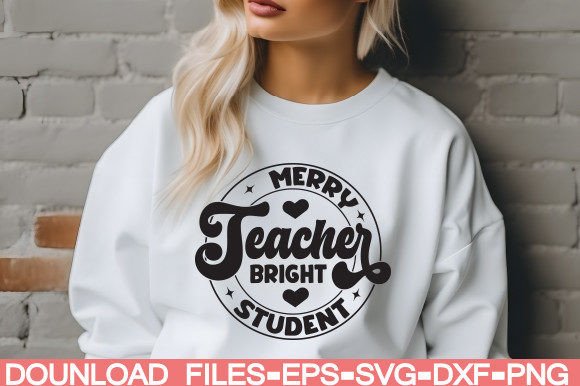
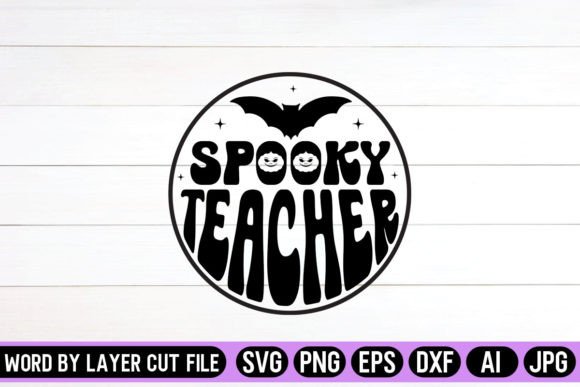
The layout of this design immediately strikes a balance between playful and professional. The circular framing suggests a badge or patch aesthetic, which is inherently versatile. For embroidery designers and Etsy sellers, this shape is advantageous because it contains the stitch area neatly, reducing the risk of loose threads or uneven edges that often plague open-ended designs. The "spooky" element is handled with a whimsical touch rather than genuine horror, making it appropriate for a wide demographic, from elementary school teachers to college professors who enjoy a bit of seasonal humor.
Visually, the design relies on clear lines and distinct shapes. In the context of Crafts and Graphics, this clarity is essential. When viewing the included PNG preview, the contrast appears strong, which is a good indicator that the underlying vector paths in the SVG and AI files are clean. Clean paths mean fewer jumps and trims during stitching, resulting in a more professional finished product. The mood is lighthearted, creating an instant connection with buyers looking for unique, personality-driven items.
Real-World Application: The Custom Tote Bag Scenario
To truly evaluate the Spooky Teacher Round Signs SVG Design, I imagined a specific real-life scenario: creating a limited-run batch of canvas tote bags for a local teacher’s union holiday gift exchange. Canvas is a forgiving fabric, but it requires careful consideration of stitch density. If the design is too dense, the bag will pucker; if it is too light, the background fabric will show through, ruining the visual impact.
In this scenario, the round format works exceptionally well. It centers naturally on the bag’s face, providing a focal point without overwhelming the utility of the item. Using a combination of satin stitch for the borders and text, and a fill stitch for any larger graphic elements, the design would pop against a natural or black canvas. The key here is thread selection. A matte cotton thread would enhance the handmade feel, while a rayon thread would add a subtle sheen suitable for a boutique presentation. This design fits seamlessly into the category of personalized gift items that sell well during the autumn season.
Versatility Across Apparel and Home Decor
Beyond tote bags, this design shows promise in several other areas of commercial embroidery. For custom apparel, such as a crewneck sweatshirt, the design would need to be scaled appropriately. Sweatshirt fleece is thick, so ensuring the digitizing accounts for pile height is crucial. If the original file is a standard SVG intended for cutting machines, it may need to be manually digitized or adjusted for embroidery software to prevent thread breaks.
For baby embroidery projects, such as a onesie or bib, the scale must be reduced significantly. Here, the simplicity of the round sign becomes a liability if the details are too fine. Tiny lettering can become illegible when stitched at a small size. I would recommend testing a sample on scrap fabric to determine the minimum viable size. Similarly, for embroidered patch creation, the design is ideal. Patches allow for heavier stabilization and denser stitching, which can bring out the richness of the colors without worrying about fabric distortion.
In home decor, consider a kitchen towel or pillow cover. A towel embroidery project benefits from a design that does not interfere with the towel’s absorbency or texture. Placing the round sign on the corner or lower third of the towel creates a sophisticated accent. For pillow covers, the design can serve as a central motif, especially if paired with complementary seasonal colors like orange, purple, or deep green.
Technical Considerations and Potential Pitfalls
While the Spooky Teacher Round Signs SVG Design is visually appealing, there are technical aspects that require careful attention. The product description notes that the download includes AI, SVG, PNG, EPS, and DXF files. It is critical to understand that these are primarily vector graphics formats, not native embroidery machine files like PES or DST. Unless you have embroidery software that can auto-digitize these vectors with high precision, you may need to convert them manually.
Auto-digitizing can sometimes result in poor stitch density management or incorrect stitch types. For instance, small text might be converted into a running stitch that is too thin to cover the fabric, or a fill area might be too dense, causing the fabric to bunch. Always inspect the stitch plan in your software before sending it to the machine. Check for excessive jump stitches and ensure that the start and end points are logical.
Fabric choice also plays a pivotal role. On stretchy fabrics like jersey knits, a robust stabilizer is non-negotiable. Without proper support, the round shape could distort into an oval during washing. On dark fabrics, ensure that the design does not rely on subtle color gradients that may get lost. High-contrast thread colors are your best friend here. Additionally, if you are stitching on curved surfaces like caps, the round design must be centered perfectly to avoid visual imbalance.
Enhancing Brand Value and Customer Trust
For small shop products and craft business owners, the quality of the embroidery directly influences brand perception. A clean, well-stitched Spooky Teacher Round Signs SVG Design signals professionalism. It suggests that the maker cares about details, which builds customer trust. When buyers see a crisp edge and consistent tension, they are more likely to leave positive reviews and return for future purchases.
This design also offers excellent opportunities for marketing. Creating printable mockup images or digital previews for your online store can help customers visualize the final product. Show the design on different items—a mug, a shirt, a bag—to demonstrate its versatility. Highlighting the "word by layer" aspect of the SVG files can also be a selling point for customers who want to customize colors or elements before purchasing a custom order.
Practical Designer Notes for Best Results
- Test on Scrap Fabric: Never stitch the final product first. Use a similar fabric and stabilizer combination to test tension and density.
- Check Thread Contrast: Ensure the thread colors stand out against the fabric. Use a color wheel to find complementary or contrasting shades.
- Verify Hoop Size: Confirm that the design fits within your machine’s hoop dimensions. If resizing, maintain the aspect ratio to prevent distortion.
- Inspect Small Details: Zoom in on the digitized file to check for tiny stitches that may break or cause bird nests.
- Use Proper Stabilizer: Match the stabilizer to the fabric weight. Cut-away stabilizers are often best for stretchy knits, while tear-away works for woven cottons.
- Confirm Licensing: Before selling finished items, review the license terms associated with the digital download. Ensure commercial use is permitted.
- Mockup Testing: Create black and white mockups to check for value contrast. If the design disappears in grayscale, it may lack definition in real life.
In conclusion, the Spooky Teacher Round Signs SVG Design is a strong candidate for seasonal embroidery projects. Its round format, whimsical theme, and clear lines make it adaptable for various applications, from sweatshirt embroidery to decorative patches. However, success depends on thoughtful execution. By paying attention to digitizing quality, fabric selection, and stabilization, designers can transform this digital asset into a high-value handmade product that resonates with customers and enhances their brand identity.